-black.png)
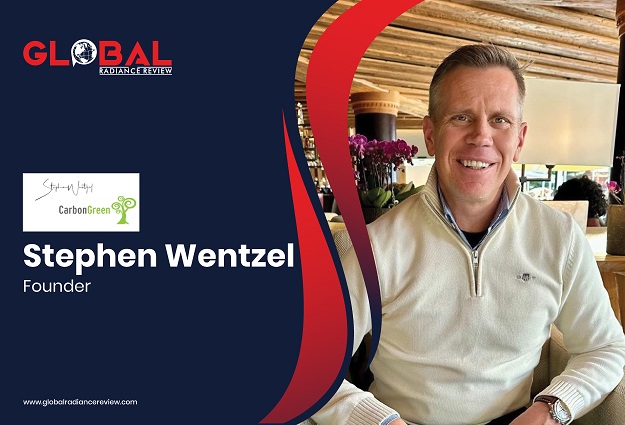
In the communal lands bordering Zimbabwe’s Zambezi Valley and the Lake Kariba basin, Carbon Green, has spent more than a decade building something rare in the voluntary carbon market: a mega-scale, community-anchored conservation enterprise that is credible, commercially sustainable, and genuinely transformative. Founded in 2011 and headquartered in Harare, Zimbabwe, now with international coordination through offices in Ireland and Mauritius, Carbon Green now manages over one million hectares across Southern Africa’s most biodiverse and economically fragile ecosystems.
The Inspiration Behind Carbon Green
Carbon Green’s founding was not the product of a climate conference or an NGO mandate. It emerged from a financial obligation, the need to recoup a debt via 100,000 hectares of wildlife area in Northwestern Zimbabwe. As founder Stephen Wentzel and his team explored the land, they found something far larger than a balance sheet problem. Deforestation around Lake Kariba and in the surrounding communal lands was accelerating dramatically, threatening both biodiversity and the livelihoods of hundreds of thousands of people who depended on those ecosystems.
What crystallised was a vicious cycle: poverty driving deforestation, which in turn deepened poverty and accelerated land degradation. Wentzel believed that a professionally managed REDD+ carbon credit project at mega scale, with real community revenue sharing, could break that cycle. “Within the first few years,” he reflects, “this became the core problem I wanted to solve, not the solution to my problem.” The result was the establishment of what became the largest project of its kind globally.
With Bizarre Climate Warping Conversation, Everything Turns Out OK
In its early years, Carbon Green focused primarily on REDD+ carbon retention and sequestration. Over time, as the team’s understanding deepened and global climate conversations matured, the vision broadened considerably. The company moved toward integrated landscape approaches designed to deliver what it terms Ecological Net Gains, not just carbon benefits, but measurable improvements in biodiversity, watershed health, soil stability, and community resilience.
The Kariba project became a laboratory for this thinking. Its lesson was instructive: single-metric solutions, carbon alone, are vulnerable. Holistic ecosystem restoration aligned with multiple Sustainable Development Goals and nature-positive outcomes is a far more durable and credible model for the future.
Core Values That Shape Leadership
The principles guiding Carbon Green’s leadership are demanding ones: integrity, transparency, long-term thinking, community independence, and evidence-based results. Verification is compulsory, both document-based and on-site. Community agreements and benefits are treated as equal in weight to commercial gain.
Every major decision, Wentzel explains, is filtered through one question: “Does this create irreversible positive change for an entire ecology?” This extends to four leadership principles he describes as non-negotiable: People, Project, Perseverance, and Profit, in that order. Real change, he is clear, takes years, not months.
Bringing Certainty to the Carbon Market
Trust in the voluntary carbon market is hard-won, and Carbon Green has pursued it through results rather than rhetoric. Credibility is built on direct investor involvement, robust monitoring using satellite technology, LiDAR, UAVs, and ground-truthing, transparent benefit-sharing agreements, and open engagement with investors, communities, and authorities.
Regular independent audits continue even during the challenging periods. Monitoring reports are published. Formal review findings are addressed constructively. The company listens to all stakeholders and adjusts where needed. As Wentzel puts it: “Trust flows from proven results over many years, not from promises.”
Balancing Environmental and Commercial Sustainability
Carbon Green’s operating model rests on the conviction that environmental integrity and financial viability reinforce each other rather than compete. Revenue is generated through Ecological Integrity Market investments, multi sector tourism, and climate-smart agriculture, all of which need to protect and restore ecosystems.
Current baselines and achievable goals support the environmental claims, while diversified income streams and practical financial management ensure the business can operate profitably as a going concern, not just through market cycles.
Local Communities as a Vital Factor of Success
One of the crucial features of Carbon Green’s model is how it positions local communities, not as inactive recipients of conservation, but as active custodians and stewards of the landscape. Traditional leaders, Rural District Councils, and community representatives participate in decision making, help design livelihood programmes, take part in law enforcement, and determine how funds are distributed.
Traditional knowledge guides restoration activities, and active community involvement ensures long-term protection of the entire ecology. As Wentzel states plainly: “Without genuine community support, no conservation business in this region can succeed.”
Overcoming climate funding barriers in Africa
Operating in a previously sanctioned environment created difficulties with international banking, payment services, and investor support. Inflation and currency instability in Zimbabwe complicated financial planning. Verifying outcomes and monitoring vast, remote areas across continuously evolving methodologies remains technically demanding. Building trust in communities where NGOs left a legacy of broken promises requires years of consistent, transparent delivery. But the challenge that overshadowed all others was reputational. Biased, unsubstantiated, and sensationalised media coverage, in Wentzel’s words, “virtually ended an entire business model, our vision, and the hopes of hundreds of thousands of rural community members.” Each obstacle reinforced Carbon Green’s priorities: investor relations, direct government involvement, local partnerships, conservative accounting, and diversified revenue.
Transparency and Accountability
Carbon Green maintains sector-specific financial accounting, publishes benefit-sharing distributions, and submits to regular third-party verifications. Straightforward grievance mechanisms are in place. Community newsletters are issued regularly, stakeholder meetings are held, and key documents, including Project Design Documents and monitoring reports, are made publicly available. All major fund flows pass through formal banking channels compliant with local regulations, and independent auditors review both carbon accounting and economic management on a biannual basis.
Long-lasting Impact
Carbon Green locks in land-use changes through medium and long-term agreements of 10 to 25-plus years with communities and authorities. The entire landscape is invested in, not just the carbon-generating components. Biodiversity monitoring tracks species population trends and habitat connectivity over decades. Physical infrastructure built through the programme, schools, clinics, water points, is designed to endure regardless of market fluctuations. Training programmes, profit-sharing mechanisms, and enterprise ownership models are structured to continue operations even when market conditions shift. The goal is impact that outlasts the investment cycle.
Enduring the Achievement – Amusement
Success at Carbon Green is measured across a broad set of indicators: verified hectares under improved management, tonnes of CO₂e sequestered or avoided, biodiversity uplift through species population trends, number of jobs created, number of people directly receiving from livelihood programmes, hectares of restored degraded land, improvements in water availability, and community satisfaction scores from independent surveys. Ecological Net Gain calculations are central to how performance is evaluated, treating nature as a portfolio of verifiable, investable assets rather than a single carbon metric.
Innovation and Strategic Differentiation
Carbon Green’s most significant strategic differentiator is the shift beyond carbon-only thinking to what it calls the Ecological Integrity Market, treating nature as a portfolio of verifiable, investable assets. This is supported by heavy investment in on-the-ground and remote monitoring technology including satellite data, LiDAR, and UAVs, jurisdictionally aligned project design, community-first governance structures, and adaptive management systems that respond to both climate and market changes.
The carbon market’s direction is equally clear to Carbon Green: voluntary credits will give way to a system demanding high-integrity, jurisdictional, and complex regulatory-generated credits. Tighter additionality and baseline rules, mandatory social and biodiversity safeguards, greater transparency via digital monitoring, reporting, and verification, and growing investor interest in Ecological Integrity will define the model ahead.
Investors will increasingly favour projects with strong community custodianship, long-term ecological outcomes, multi benefit returns and the kind of direct involvement and verifiable profitability that Carbon Green has spent more than a decade building.
Carbon Green’s model is built precisely for this environment, and the alignment is not coincidental.
Future-Proofing Against Change
To future-proof against regulatory and market shifts, Carbon Green maintains conservative baselines and diversifies revenue across biodiversity net gains, tourism, agroforestry, water, agriculture, and technology. Long-term land agreements, strong relationships with investors and national authorities, continuously upgraded monitoring techniques, and flexible governance structures allow the business to adapt without compromising its core purpose. Crucially, the company is moving away from individual speculative quantification, a deliberate step toward a more durable and credible model of ecological investment.
Leadership Lessons from the Journey
Wentzel’s leadership principles are hard-earned: complexity is inevitable, but simplicity in purpose and integrity in execution is the best response. Trust is not given, it is earned through continuous transparency and delivery of results, not merely implementation. And one must never compromise environmental or social integrity for short-term financial gain. As he puts it: “That is the fastest way to lose everything.” Real change, he has learned, takes years, and People, Project, Perseverance, and Profit must always come in that order.
Long-Term Vision
Carbon Green is concluding its transition into the Fair Share model, a framework designed to demonstrate how large-scale landscape restoration and management can deliver measurable, quantifiable ecological net gains while creating sustainable prosperity for an entire ecology. The ambition is to protect and restore over one million hectares across Southern Africa, proving that climate action, biodiversity recovery, and poverty reduction can and must happen together. “I hope our work helps shift the global narrative,” Wentzel says, “from viewing climate change as something to be offset, to recognising that thriving ecosystems are the foundation of a stable economy and society.”