-black.png)
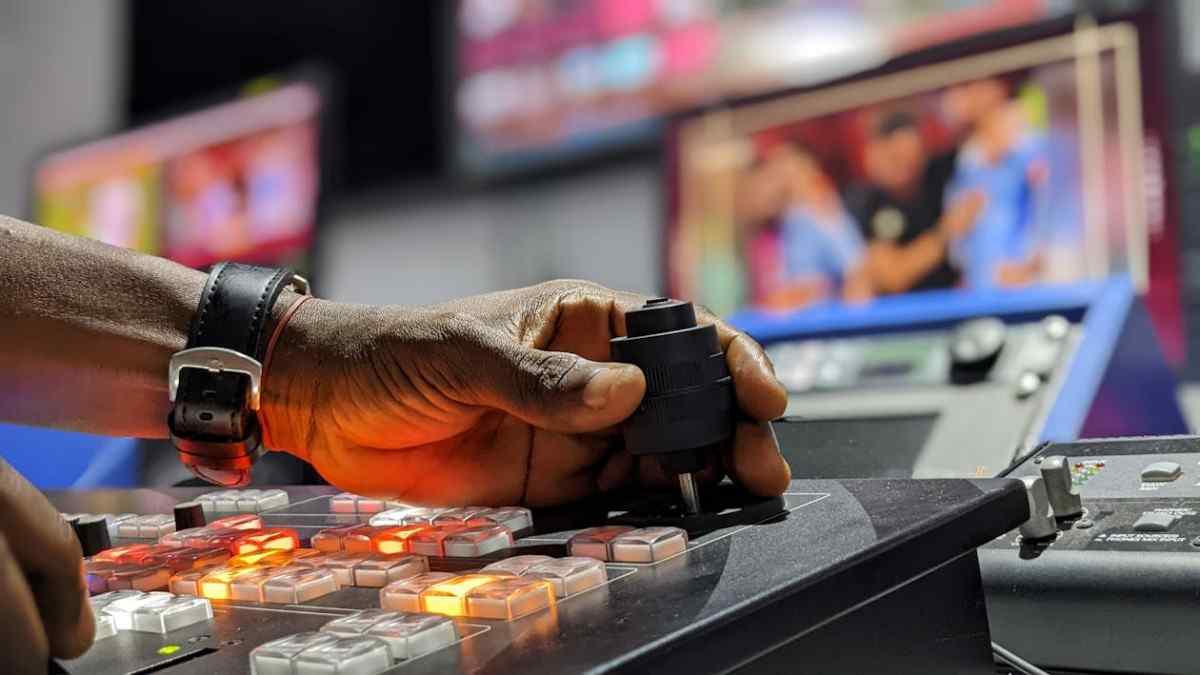
The broadcast industry isn't what it used to be.
Broadcast signal distribution used to be synonymous with dedicated hardware, massive infrastructure, and costly point-to-point links. Those days are gone. Today, a new paradigm is taking over.
Signal over IP is changing the game for commercial broadcasters.
If you understand what's going on — and how it'll impact the next decade — you're going to win big.
Here are five things you should know about broadcast signal distribution over IP:
1. What is broadcast signal distribution over IP?
2. Why is everyone switching to broadcast over IP?
3. How does signal over IP work?
4. What are the key technologies behind it?
5. What does it mean for commercial broadcasters?
Let's take a closer look.
What Is Broadcast Signal Distribution Over IP?
Broadcast signal distribution over IP is the process of delivering audio and video signals over internet protocol networks instead of traditional broadcast infrastructure. This means sending content as data packets across IP networks instead of SDI cables and dedicated hardware appliances.
Sounds simple enough, but this change represents a huge shift for the broadcast industry.
Companies like Thor Broadcast are leading the charge in IP-based broadcast signal distribution with world-class encoding, decoding, and transport solutions that allow commercial broadcasters to send and receive broadcast quality signals anywhere in the world over existing network connections. No new cabling. No new satellite uplinks.
Want to know what's really exciting about this model?
Signal bandwidth is no longer a limiting factor for how many sources you can send or where they can go. The old system was expensive and inflexible. IP is not.
Why Is Everyone Switching To Broadcast Over IP?
The numbers speak for themselves.
The global live IP broadcast equipment market grew from $1.44 billion in 2024 to $1.65 billion in 2025 — recording a compound annual growth rate (CAGR) of 14.5%.
Adoption is picking up across the industry for a few reasons:
-> Cost savings. Legacy broadcast infrastructure requires expensive hardware that costs even more to operate and maintain. IP networks can be built with commodity hardware at a fraction of the price.
-> Flexibility. IP-based workflows allow you to scale bandwidth and capacity up or down based on need. Legacy hardware cannot.
-> Multi-platform distribution. Audiences are spread across more screens than ever before. Signal distribution over IP makes it easier than ever to reach them all from a single workflow.
Streaming now accounts for more than 36% of US primetime viewing hours. Cable was overtaken for the first time ever. Broadcasters have no choice but to evolve.
Here's the thing…
Signal over IP is not "streaming." At least not in the way most people think about streaming.
Signal over IP is reimagining the broadcast signal distribution process from end-to-end. By understanding how it works, you can more easily take advantage of it.
Breaking it down…
Signal distribution over IP works in 3 steps:
Step 1: Encode
Raw video or audio feeds get ingested into an encoder which converts them into a compressed digital format. Formats include, but aren't limited to H.264, H.265, JPEG 2000, etc. The encoder then packages the compressed signal into IP data packets for transport.
Step 2: Transport
Those IP data packets get sent over an IP network. This can be a private MPLS network, public internet circuit, or a hybrid of both. Protocols like SMPTE ST 2110, SRT, and RIST are used to ensure ultra-low latency and maximum reliability during transport.
Step 3: Decode
On the receiving end, a decoder un-packages the IP data packets and converts them back into a clean digital video or audio feed. That feed gets plugged directly into broadcast gear, playout systems, streaming platforms, etc.
Makes sense so far?
The hard part is ensuring you can maintain broadcast-quality standards over a network that wasn't originally designed for real-time media. That's where specialized equipment and intelligent protocols come into play.
The Key Technologies Behind It
A few different technologies are driving the growth and adoption of broadcast signal distribution over IP.
SMPTE ST 2110 is quickly becoming the professional broadcast industry standard when it comes to IP. It breaks video, audio, and ancillary data into their own separate streams giving you complete control over each piece of the puzzle. Broadcast facilities around the world are migrating to ST 2110 right now.
SRT (Secure Reliable Transport) is an open-source, low-latency transport protocol designed specifically for reliable, high-quality video transport over unstable public internet networks. It's smart enough to automatically recover from packet loss and jitter which makes it ideal for live contributions and long-distance distribution.
RIST (Reliable Internet Stream Transport) is similar to SRT in that it was built specifically for video transport over IP. Where RIST shines is long-distance distribution across global networks where packet loss over public internet connections is common.
Cloud-based playout allows broadcasters to build out master control operations completely in the cloud — freeing them from the need for expensive hardware rooms full of dedicated appliances. Over half of new broadcast facilities are being built with some level of virtualized equipment these days.
While there are other technologies at play — these four help make broadcast signal distribution over IP a reality.
What Does Signal Over IP Mean For Commercial Broadcasters?
Signal distribution over IP is more than just a trend. It's an immediate opportunity to solve real-world challenges while positioning your business for future growth.
Here are just a few ways broadcast over IP can help commercial broadcasters today.
Cutting infrastructure costs is the first thing most people think of. Legacy SDI distribution required significant investments in capital equipment as well as ongoing operating costs to maintain. IP infrastructure can be shared across links and hardware reducing overall expenses.
Producing live events remotely is possible thanks to IP-based broadcast signal distribution. Signals can be sent from a stadium, studio, or remote location straight to a central production hub without having to send out a satellite truck.
Here's one that gets overlooked…
Building in redundancy just got a whole lot easier.
The old infrastructure model required expensive redundant hardware at every step of the signal chain. With broadcast over IP, redundant signal paths can be built into the architecture. Automatic failover and real-time signal monitoring are built-in features instead of costly add-ons.
Broadcast infrastructure as a whole is expected to reach $8.27 billion by 2030 — growth attributed to increased demand for IP-based signal transport as well as cloud-native playout workflows.
The flexibility of IP-based infrastructure also means you can:
-> Expand into international markets without laying new infrastructure
-> Deliver content to OTT services and linear channels simultaneously
-> Scale up for major live events without purchasing additional hardware
Commercial broadcasters who invest in IP infrastructure will be years ahead of their competition.
The Bottom Line On Signal Over IP
Broadcast signal distribution over IP is the future. The industry is already years into the transition.
The technology has been around for over a decade. Knowledge and education around the available protocols is spreading every day. Costs are going down as competition heats up.
Here's your takeaway:
-> Learn the protocols — SMPTE ST 2110, SRT, and RIST are the standards that power modern IP workflows
-> Invest in equipment — broadcast quality encoders, decoders, and transport equipment designed for IP workflows
-> Plan for flexibility — architect your IP infrastructure in a way that allows you to scale up or down with ease
Big name broadcasters are making the switch right now. Companies that don't keep pace will be left in the dust.