-black.png)
In today’s uncertain times, it is imperative that organizations be ready for the unexpected. Normal business operations can be interrupted in mere minutes during natural disasters, cyberattacks, public health emergencies, operational failures, and other crises.
During such situations, the biggest challenge is often not the lack of information. Rather, it’s about handling information, organizing people, making swift decisions, and making sure everyone is aligned towards the same objective.
Veoci has filled an important position here.
Veoci is a cloud-based software provider specializing in collaboration, emergency and business continuity, crisis management, and daily operations. It serves organisations to develop and maintain digital workflows to facilitate planning, response, communication, recovery, and operational resilience. Veoci is used by organizations in all industries, such as aviation, government, healthcare, education, enterprises, and utilities.
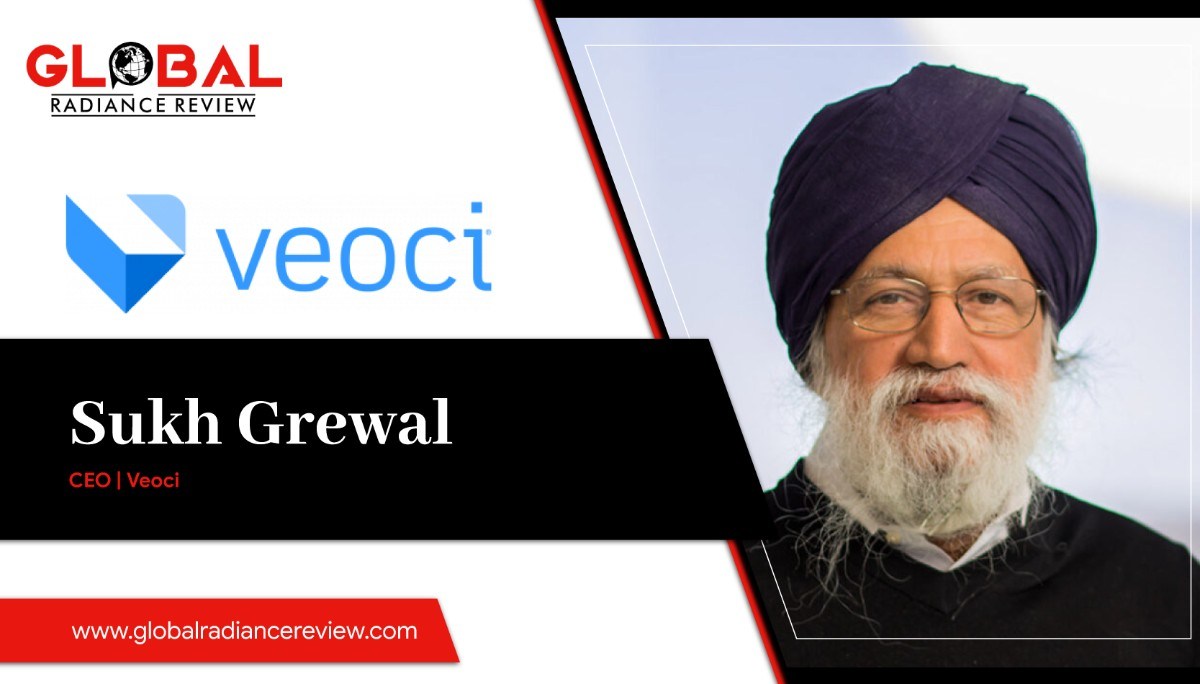
Dr. Sukh Grewal, Co-Founder & CEO of Veoci, leads the company. Having a long history in technology, engineering, enterprise systems, and large-scale digital platforms, Grewal has been instrumental in creating Veoci around a compelling idea: If uncertainty arises, it’s time for organizations to have clear information, flexible processes, and strong coordination.
Veoci was started in 2011 as part of the SupportCentral project at GE. Years of expertise in enterprise technology and collaboration systems were combined by Dr. Sukh Grewal and key members of the founding team, forming a new breed of platform.
The aim was to enable organisations to digitise complex processes without having to develop all the solutions in the conventional software development approach.
The concept of this was crucial.
A lot of organisations rely on spreadsheets, emails, paper, telephone calls, and multiple software applications. These tools can be dealt with during normal daily operations, but not during emergencies. However, information that is not connected can lead to confusion and delays in an emergency.
During a crisis, teams need to be swift.
They might need to know what has happened, who is responsible, what resources are available, what actions have been taken, and what needs to be done.
The design of Veoci was to centralize these activities in a more unified digital space.
Dr Sukh Grewal has a unique background in his career as the CEO.
He earned his Ph.D. in Mechanical Engineering from the University of Wisconsin–Madison and has a bachelor’s degree in Mechanical Engineering from the University of Maryland.Tech of IIT Kharagpur. He has worked in the areas of engineering computing, large-scale data systems, manufacturing processes, and enterprise collaboration technology.
SupportCentral was one of the most important aspects of his career as an enterprise work and social platform, serving hundreds of thousands of users in several languages.
This experience influenced his understanding of the use of technology in connecting large groups of people.
Veoci has steered clear of purist software development under Grewal’s guidance, emphasizing the development of software that helps people when they are facing real-world problems, instead of software for the sake of software.
The thought of customer service is still a major aspect of the business.
Veoci’s mission is to help organizations save time, money, and lives by working together, staying in the loop, reacting, and adapting to a digital solution.
Coordination of Emergencies – Managing Emergencies Through Better Coordination
In an emergency, it is impossible for organisations to lose time looking for information.
Consider a significant storm hitting an airport, hospital, university, or government facility.
The two teams might have to communicate simultaneously. Field updates might be required for leaders. Resources might have to be allocated in a rapid way. Decisions need to be documented.
If there is no system in place, information can get lost.
One team could be using email, another could be talking on the phone, and another could be working with spreadsheets.
Veoci enables organisations to build a virtual workspace to enable teams to coordinate their activities.
The platform can help the organizations in planning, responding, monitoring, managing resources, and documenting actions in the event of an emergency.
The company’s strategy is to establish a digital base that can be used for both scheduled activities and unforeseen circumstances.
Business Continuity in an Uncertain World
Emergency management is only one part of organizational resilience.
Businesses and institutions also need plans for continuing important operations when something goes wrong.
A cyberattack may affect computer systems. A natural disaster may close offices. A supply chain issue may interrupt essential services.
Business continuity planning helps organizations prepare for these situations.
Veoci provides tools that can help organizations create, manage, and update continuity plans.
Instead of keeping plans in documents that may be difficult to access or update, organizations can build digital processes that are easier to manage and activate.
This is important because a plan is only useful when people can find it and use it during a real emergency.
Veoci’s approach supports the idea that preparedness should not be treated as a document that is created once and forgotten.
Plans need to be reviewed, tested, updated, and improved over time.
The Power of a No-Code Platform
One of Veoci’s most important strengths is its no-code platform.
Traditional software development often requires technical programming skills and long development cycles.
However, organizations sometimes need new applications and workflows quickly.
For example, an organization may need a new approval process, incident reporting system, emergency checklist, resource tracking tool, or crisis response workflow.
A no-code platform allows users to create and adapt applications without writing traditional computer code.
This makes the platform more flexible.
Veoci can support simple workflows as well as more complex continuity and response programs. The company has positioned its platform as a way for organizations to develop applications that fit their specific operational needs.
This flexibility is particularly valuable because no two organizations manage emergencies in the same way.
A hospital has different requirements from an airport. A university faces different challenges from a utility company.
Veoci’s adaptable platform allows organizations to create solutions based on their own processes.
Veoci works across several industries where preparedness and coordination are especially important.
These include aviation, healthcare, government, education, utilities, finance, and other enterprise environments.
For airports, emergency management can involve weather events, operational disruptions, passenger safety, and coordination between many teams.
For hospitals, emergency planning may involve patient care, facility operations, staffing, and communication during major incidents.
Government agencies may need to coordinate with multiple departments and external organizations.
Despite these differences, all these industries share one common need: the ability to bring people and information together quickly.
Veoci’s platform is designed to support this requirement.
The company reports that more than 180 airports connect with Veoci, while its clients also include Fortune 500 companies and healthcare organizations serving millions of patients.
The world is becoming more connected, but it is also becoming more complex.
Organizations face new risks from cyber threats, climate events, infrastructure problems, public health emergencies, and operational disruptions.
As these challenges grow, the need for better preparedness and coordination will also increase.
Technology will play an important role in this future.
Artificial intelligence, automation, real-time data, cloud platforms, and digital communication tools will continue to change how organizations manage risk and respond to emergencies.
However, technology alone will not create resilience.
True resilience requires prepared people, clear processes, strong leadership, and access to reliable information.
This is where Veoci has built its long-term vision.
Under the leadership of Dr. Sukh Grewal, Veoci continues to develop technology designed to help organizations turn uncertainty into coordinated action.
The company’s story demonstrates that the value of technology is not simply measured by how advanced it is.
Its true value is measured by how well it helps people solve real problems.
Veoci and Sukh Grewal represent a technology-driven approach to resilience, where flexible software, human decision-making, and strong processes work together.
As organizations prepare for an increasingly uncertain future, platforms that improve communication, coordination, continuity, and response may become more important than ever.
The journey of Veoci shows that when the unexpected happens, being prepared is not only about having a plan. It is about having the right people, information, processes, and technology ready to act together.