-black.png)
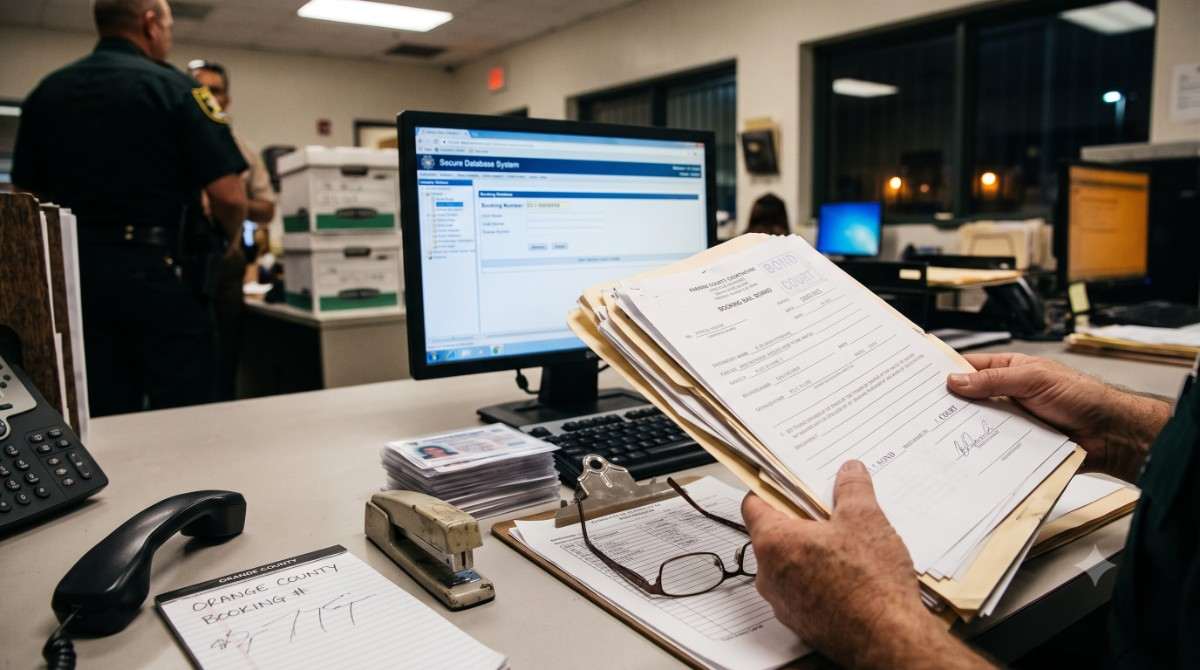
Forty minutes. That's the gap between two clerks processing the same bond packet, and it's the fastest I've ever seen a jail release close. It can just as easily take nine hours, and the difference almost never comes down to the judge. It comes down to paper.
You'd think a bail bond is about money. Mostly it's about paperwork moving between four buildings that don't talk to each other well. I spent the better part of a weekend shadowing how bond documents travel through Orange County's system, and what I learned should matter to anyone who has ever gotten a collect call at 2 a.m. from a family member sitting in a holding cell.
Here's what I want to walk you through: how a bond actually moves, where it stalls, what families get wrong in the first hour, and the one habit that saves more time than any phone call. If you're staring down this situation right now, this is your map.
Who actually touches your paperwork
The jail releases no one. That's the first thing nobody tells you. The intake deputy signs off on the booking sheet once processing is done, then the paperwork goes to pretrial services for review, then back to the court clerk for a docket entry, then to the bonding office, and only then does the release door open.
That's four desks. Each one has its own queue, shift changes, and coffee breaks. That's why an arrest at 4 p.m. on a Friday is such a disaster, and why the same bond can take far longer than the number on the clock suggests.
In some counties, like the one just south where you might search Broward County bailbonds, the clerks already run an electronic court filing loop that flags mismatched identifiers before the packet ever leaves intake. In other places, it's still a paper handoff, which is where errors hide.
Pretrial services is the desk I'd watch most closely. The person reviewing the file sees exactly what the officer wrote down and nothing more, and that review can shape what bond recommendation reaches the judge at first appearance.
The bottleneck nobody warns you about
Here's what really slows things down: a 1-character typo. If the booking clerk types middle initial D instead of B, the release packet and the court docket stop matching. Nothing moves until a human being fixes it, and human beings are asleep at 2 a.m.
Then there's the identity check. The clerk has to confirm it's actually the same person, not a name twin, not a warrant confusion. A driver's license number and a full legal name matter far more than a middle name you half-remember.
Weather, shift changes, and booking volume also play in. In this part of Florida, a single busy event weekend at the theme parks can pile up arrests more than people expect, and the intake queue fills faster than it drains.
What I'd do differently next time I'm on a call like this: get the actual booking number before I dial anyone. It's the spine of the whole process. Without it, every desk is guessing.
The 30-minute drill that saves your whole night
If you find yourself sorting out a release from the house at midnight, here's the sequence I'd follow. It's not glamorous, and it's the sort of thing you only learn by watching somebody do it wrong first.
-
Write down the booking number. Every phone menu asks for it. Say it out loud, twice, and text it to yourself.
-
Get the facility name and address. The main detention center and the branch jail sit at different locations, and family members routinely show up to the wrong one at 3 a.m. because nobody checked.
-
Collect two phone numbers. One for you, one for a second contact, because the person at the counter may be on another call.
-
Ask when the next first appearance hearing is. That's the moment the bond recommendation can grade in your favor, and it's the one deadline worth knowing cold.
-
Don't call a bondsman until you have the facility. An agent can pull the rest. But if you can't name the jail, neither of you is getting far for the first hour.
The rule I live by when I'm the second set of eyes: I'd rather take ten minutes to verify the facility than two hours to undo the wrong arrival.
What the money actually buys you
Most people assume the 10 percent fee is what a bondsman keeps, the way a service charge works. It isn't. That fee compensates the surety for the risk it takes on. According to the National Association of Insurance Commissioners, surety bail written by licensed agents is a regulated insurance product, which means an agent has to be licensed and appointed to issue it. That's why the guy at the diner who swears he can "call his guy" is a problem, not a help.
The fact that the bond must be filed through a licensed bonding office is also why people see their release close only after the bond document reaches the clerk.
The pretrial side runs in parallel meanwhile. Once booked, the person is scheduled for a first appearance hearing, and the judge can set bond, hold it at no bond, or release on conditions. That hearing is what the money is waiting on.
Here's the practical version for you:
|
Situation |
What it usually means
|
|
Standard first offense, no warrant history |
Bond is typically set at first appearance, and release usually moves the same day |
|
Prior failure to appear |
The judge can raise the amount or require conditions, which slows the file |
|
Out-of-state resident |
An agent may ask about property or a co-signer before posting |
|
Bench warrant from another county |
Release from the current facility usually has to wait on that county |
The one thing families get wrong at the counter
Sending money ahead. I get why people panic and wire cash to whoever sounds official, but Florida law limits what bond agents can solicit, and legitimate agents do not press you for payment to "hold" a release. If somebody is telling you to send money right now or lose the spot, hang up.
According to the Florida Courts, defendants have a right to appear before a judge and reasonable bail, and that right doesn't require you to pay a stranger on a group. The bond itself is a filed document between the court and the licensed surety, not a handshake in a parking lot.
Good agents work quietly. They sit with the booking number, they pull court records, and they file what the court can accept. If an agent sounds like a debt collector with a rate card, that's your sign to move on.
Where logistics meets the law
The part that surprised me most: standards. The National Center for State Courts publishes guidance on pretrial release and court filing practice that shapes how clerks verify and file the paperwork you're waiting on. You'll probably never read it, and I don't blame you.
But it explains why a bond can move in an hour in one county and sit for half a day in another. It's not favoritism. It's process maturity, and not every courthouse has the same one.
If you're the one sitting by the phone, my advice is simple. Get the who, where, and the booking number, then let somebody who's done this a hundred times handle the rest. Your job isn't to understand the system. Your job is to be calm enough to make the right call, and then make it.
Want the short version for the next 3 a.m. phone call? Bookmark this piece, and the next time the name on the caller ID is a jail, you'll already know the drill.