-black.png)
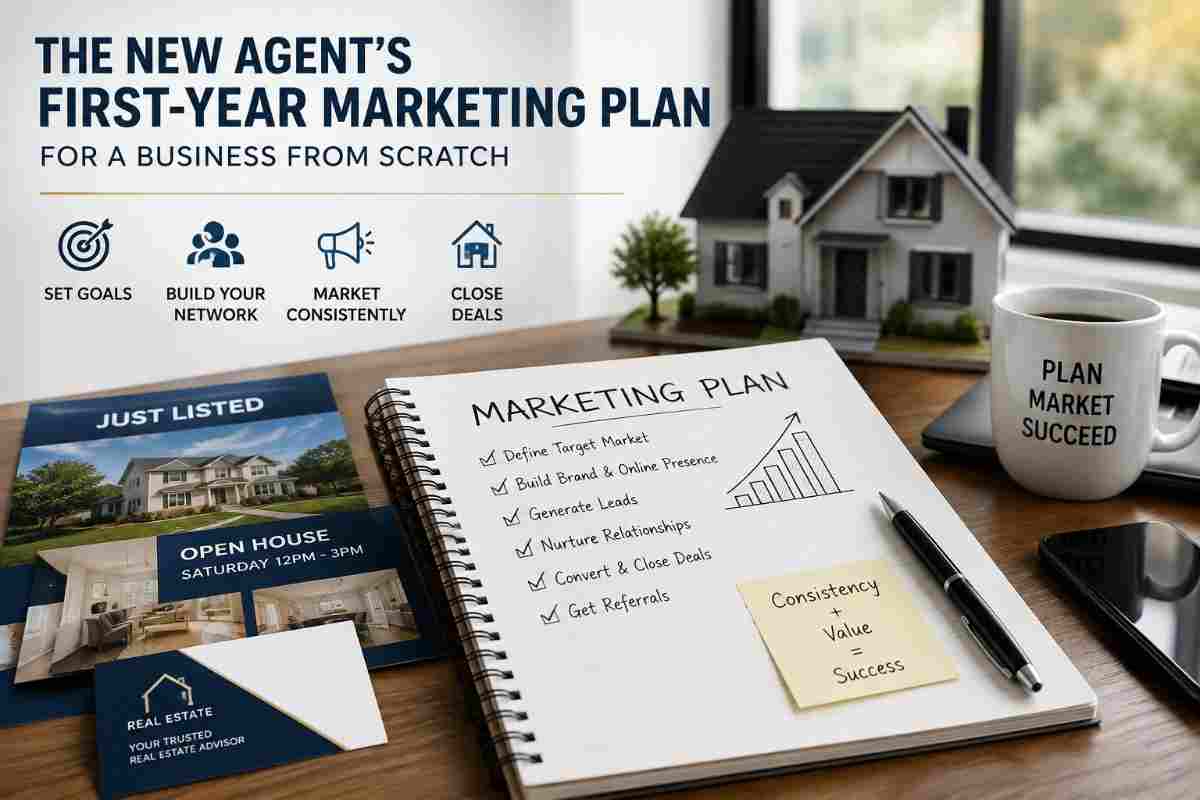
A first-year real estate career demands a deliberate marketing strategy from day one. New agents often spend the first months on random tasks that produce no client conversations. A structured plan directs effort toward activities that build visibility and trust with potential buyers and sellers. This plan turns a license into a functioning business with a clear path to first transactions. This article provides a twelve-month marketing roadmap for agents who start without an existing client base.
The luxury real estate marketing materials form the tactical foundation of this first-year plan. These materials include postcards for neighborhood visibility, professional flyers for open houses, and digital assets for online presence. New agents who select and deploy these materials correctly gain a professional appearance that competes with experienced agents. The materials serve as tangible proof of an agent's capability and commitment to the market.
Why New Agents Need a Structured Budget
A first-year marketing plan performs best around a fixed monthly budget rather than random costs. New agents typically set aside a percentage of expected commission for postcards, print materials, and prospect lists. A realistic figure ranges between five hundred and one thousand dollars per month across the initial six months, then adjusts based on results. Funds split across brand introduction, community campaigns, and follow-up mailers create balance across the year. A clear budget removes guesswork and gives every dollar a specific purpose.
Phase One: The First Quarter Foundation
The first 90 days establish the operational habits that sustain a real estate business over the long term. Agents should spend approximately 80 percent of work time on marketing and lead generation activities during this phase. The remaining 20 percent covers education and transaction preparation for the first client.
A complete contact list provides the raw material for all first-year marketing efforts. New agents should compile at least 200 contacts into a customer relationship management system. Each contact receives a tag based on relationship type and readiness to buy or sell. This database becomes the primary audience for email newsletters, postcard campaigns, and personal outreach.
A consistent mail schedule builds name recognition without requiring a large budget. New agents can send one mail piece per month to their best 75 to 150 contacts during the first quarter. This small list allows for higher frequency without excessive cost. Each mail piece should offer value rather than a simple sales pitch.
Two daily blocks on the calendar for calls and follow-up create a reliable lead generation engine. These calls should connect with sphere contacts, past acquaintances, and new referral sources. The habit of daily outreach produces conversations that mail and digital content cannot replace.
Phase Two: The Community Presence Build
The second quarter shifts focus toward visible community participation and local market engagement. Agents should attend neighborhood events, host open houses each weekend possible, and increase mail volume to a wider farm area. This phase transforms the agent from a new name into a familiar local presence.
Printed materials support community visibility in several ways. Consider these items for a complete local presence:
=> Open house flyers with property details, high-quality photos, and a QR code to the online listing
=> Just listed and just sold postcards that announce recent activity and show market knowledge
=> Professional business cards for distribution at community events and networking functions
=> Presentation folders that contain comparative market analysis and marketing plans for listing appointments
Digital content amplifies the community presence established through print. Implement these strategies for online visibility:
=> Short video updates that answer common buyer and seller questions from the local market
=> Social media posts that highlight neighborhood events, local businesses, and community milestones
=> Email newsletters with market data and home maintenance tips relevant to the local area
Phase Three: The Conversion Focus
The third quarter transitions from awareness activities to conversion-focused tactics. Agents should direct marketing efforts toward people who have engaged with previous outreach. This phase requires tighter talk tracks for objections and prepared marketing packages for the first listing appointment.
The Listing Presentation Package
A professional listing presentation package demonstrates an agent's marketing capabilities to potential sellers. This package should include a comparative market analysis, a sample marketing plan, and examples of past promotional materials. The presentation shows sellers exactly how the agent will promote their property.
Referrals from satisfied clients and professional contacts provide a low-cost lead source. Agents should develop a simple system for requesting referrals after each successful transaction. This system should include a direct ask, a referral form, and a follow-up reminder.
Automated Marketing Solutions for First-Year Agents
A direct mail platform handles the production and logistics that consume a new agent's limited time. These systems print, address, and mail postcards and letters through a single dashboard. New agents can schedule campaigns months in advance to maintain consistent outreach. The platform tracks response data so agents know which formats and lists produce results. Four specific capabilities make these platforms valuable to a first-year agent.
=> Automated drip campaigns send a sequence of mail pieces to the same list at set intervals without manual intervention. This feature ensures that no prospect receives only one touch and then gets forgotten.
=> List integration tools pull targeted addresses from the local multiple listing service or other data sources. This integration eliminates the need for separate data purchases and manual data entry.
=> Performance dashboards display response rates, cost per lead, and conversion metrics for every campaign. These dashboards show which mail pieces work and which need replacement.
=> Template libraries provide professional designs that require no graphic design skills. These templates cover common use cases like just listed, open house, and market update mailings.
A first-year marketing plan turns real estate activity into business results through structure and consistency. The luxury real estate marketing materials, combined with daily outreach habits and community presence, create a professional image that attracts clients. Agents who follow a twelve-month calendar avoid the random busywork that stalls new careers. Direct mail platforms with automation, list integration, analytics, and template libraries remove logistical barriers. The key action for every new agent is to start the first month with a contact list, a mail piece, and a daily call schedule that builds momentum from day one.