-black.png)
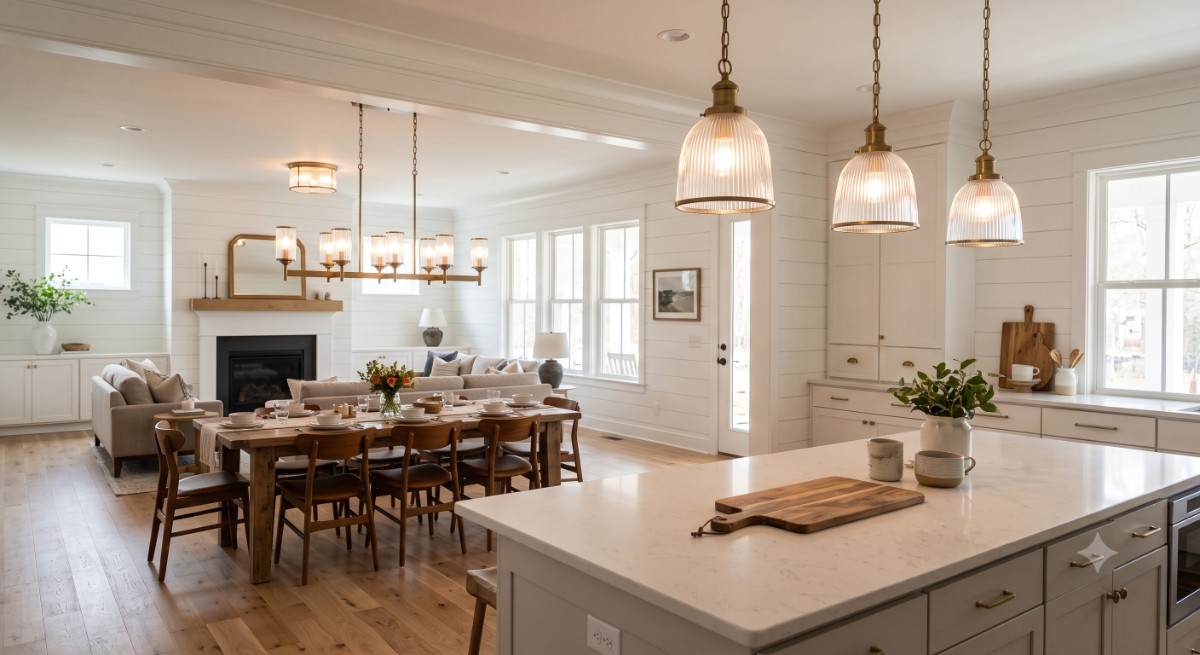
It is common that each lighting purchase occurs in a single room. You can place a pendant over the kitchen island as early as March, and then wait for a chandelier to arrive for the dining room two years from that date. These should not be expected to share any of their qualities, such as form, finish, or scale. At the end of the day, a house has many individual choices.
A collection settles that problem at the source. Each collection groups fixtures under one design idea. A chandelier, a sconce, plus a flush mount can share the same curve. Several lighting houses build their catalogs that way, for instance, the Visual Comfort lighting collections, where one family of fixtures runs across room types. The sections below cover how that approach holds up across a floor plan.
Room-by-Room Buys Leave a Home Without a Through Line
In most homes, fixtures accumulate over a period of many years. A brass pendant will hang nicely in the kitchen, while a chrome flush mount will come to replace it two years later in the hallway. This means that the finishes will fight against each other in plain view.
In open floor plans, the challenge is even bigger. The kitchen, dining room, and living room are combined in a single layout, which creates a total of three spaces that cannot share anything in terms of the chosen fixture.
A Collection Groups Fixtures Around One Design Idea
A collection starts with a single detail. A ribbed glass shade can repeat across a pendant, with matched versions for a sconce plus a bath bar. Arm shape, canopy profile and finish stay consistent through the range. The variation comes through size as well as fixture type.
That structure removes most of the guesswork from a whole-home order. A household picks the look once, then selects the right size for each room. Some collections cover eight to twelve fixture types, which reach every room in a standard floor plan.
Fixture Size Changes Room to Room
Scale plays a large role in the lighting plan. Usually, a dining chandelier is about half as wide as the table below it. Likewise, varieties of pendants along the length of the kitchen island cover its lighting needs.
Another constraint is the height. If the ceiling is eight feet high, flush lights or close-hanging pendants are required. A two-story foyer allows using a far more complicated fixture suspended by a long chain. A collection with several styles can solve placement problems.
Finish Choice Carries Across Sightlines
Finish decides how a fixture reads from across a room. Aged iron stays matte, with a soft edge against white trim. Polished nickel throws a bright highlight under daylight. Antique brass sits warm against wood cabinetry.
Most collections offer the same fixture in three or four finishes. A household can hold one finish through the main living spaces, then shift to a second finish in a bedroom. Hardware already in the room matters here as well. Cabinet pulls along with faucet finish tend to set the direction for the fixtures above them.
Six Details Worth a Check Before an Order
Points worth confirmation include:
=> Fixture diameter measured against the table width below
=> Chain or stem length available for the ceiling height
=> Finish options offered within the same collection
=> Bulb type required for each fixture in the group
=> Dimmer compatibility listed for the integrated LED versions
=> Lead time quoted for the full order
Written confirmation from the retailer helps later in the process. A backordered sconce can hold up an install date for weeks.
Signs a Room Calls for a New Fixture Set
Some signs indicate that a change is necessary. For example, dark corners in the living room indicate a lack of light sources. Strong shadows on the dining table imply that the fixture is hung too high. If different finishes are noticeable in the view, it means no planning has occurred. Light bulbs placed at eye level make it difficult to see due to reflections.
However, usually, one sign is not enough for a decision to be made. If there are two or three signs on the same floor, the situation is different and especially relevant before doing any repairs.
An Electrician Handles the Install Side
A licensed electrician sets the install date once the fixtures arrive. Heavy chandeliers call for a rated ceiling box with solid support above the drywall. Older homes sometimes lack a box at the wall position for a new sconce.
The electrician checks the existing box rating on arrival. Wire length at the ceiling gets measured against the canopy depth. Dimmer switches get matched to the bulb type inside the new fixture. Fixture weight, mount height plus switch placement all get settled in one appointment. That visit spares the household a return trip for a part swap.
Fixtures bought one room at a time leave a home without a shared look. A single collection settles the shape, the finish, plus the scale across every space in the floor plan. Several lighting houses group their ranges that way, such as the Visual Comfort lighting collections, where one style covers a chandelier through to a bath bar. A measurement list for each room helps at the ordering stage. Households that pick the collection first keep every later purchase simple.