-black.png)
As digital assets become more widely adopted, protecting them has become just as important as choosing which assets to own. While market volatility often gets the most attention, security mistakes remain one of the leading reasons investors lose access to their holdings.
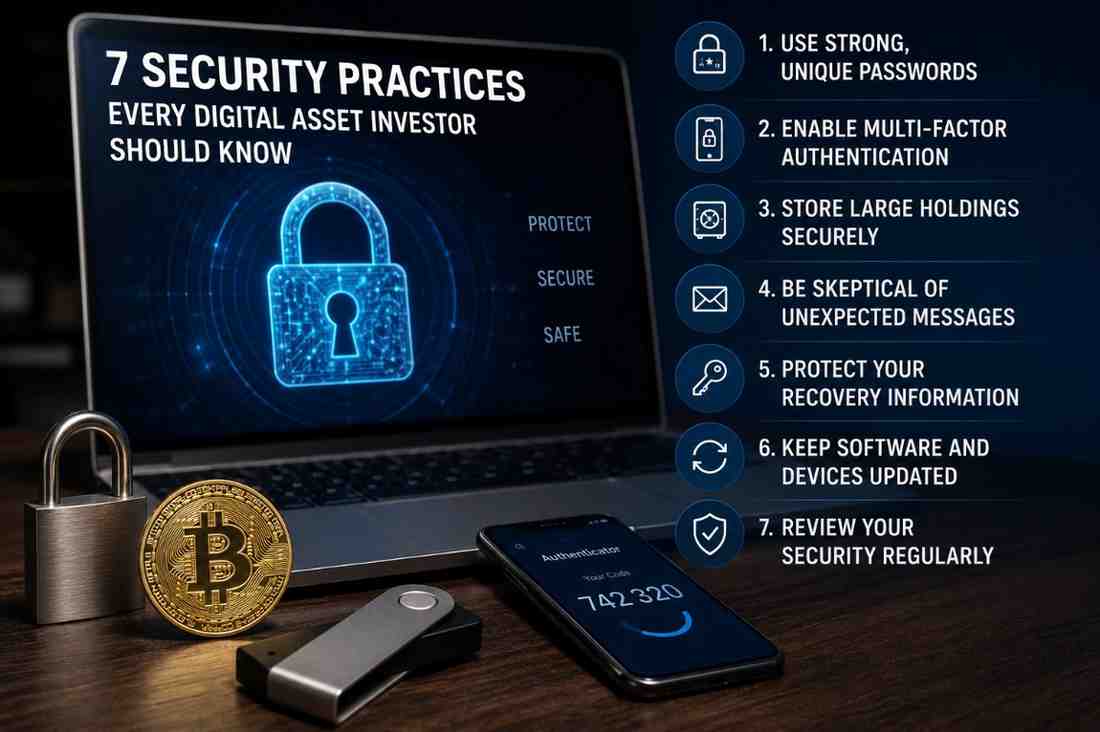
Whether you're new to digital assets or have been investing for years, following proven security practices can significantly reduce your risk. Here are seven habits every investor should make part of their routine.
1. Use Strong, Unique Passwords
One of the simplest ways to improve account security is by creating strong passwords that are unique for every platform you use. Reusing passwords across multiple accounts increases the likelihood that one compromised login could expose your other accounts.
A password manager can help generate and securely store complex passwords so you don't have to remember each one individually.
2. Enable Multi-Factor Authentication
Passwords alone are no longer enough to protect valuable accounts. Multi-factor authentication (MFA) adds another layer of security by requiring a second form of verification before someone can log in.
Authenticator apps or hardware security keys generally provide stronger protection than SMS-based verification, which may be vulnerable to SIM-swapping attacks.
3. Store Large Holdings Securely
Leaving significant amounts of digital assets on trading platforms may increase your exposure if the platform experiences a security incident. Investors with larger portfolios often consider solutions designed for long-term protection.
Understanding crypto custody options is an important part of that process. Depending on an investor's goals, solutions may range from self-managed hardware wallets to institutional-grade custody providers such as BitGo that offer additional security controls and operational safeguards for managing digital assets.
4. Be Skeptical of Unexpected Messages
Scammers frequently impersonate exchanges, wallet providers, customer support teams, or even friends to trick investors into revealing sensitive information.
Avoid clicking links from unexpected emails or text messages, and always verify website addresses before entering login credentials. If something feels urgent or unusual, take a moment to confirm its legitimacy through official channels.
5. Protect Your Recovery Information
Your recovery phrase or private keys provide access to your assets. If someone else obtains them, they may be able to take control of your wallet. If you lose them yourself, recovery may be impossible.
Store recovery information offline in a secure location, and never upload it to cloud storage, email it to yourself, or share it with anyone claiming to offer technical support.
6. Keep Software and Devices Updated
Security updates aren't just about adding new features—they often patch vulnerabilities that attackers actively try to exploit.
Regularly updating your computer, smartphone, wallet software, browser, and security applications helps close known security gaps before they can be used against you.
It's equally important to download software only from official sources to avoid installing malicious applications disguised as legitimate tools.
7. Review Your Security Regularly
Security isn't something you set up once and forget. As your investments grow and technology evolves, it's worth reviewing your protections on a regular basis.
Check your account activity, verify your recovery information is still secure, update passwords when appropriate, and confirm that your authentication methods remain current. Performing a periodic security review can help identify small issues before they become larger problems.
Security Is an Ongoing Process
No single tool or strategy can eliminate every risk, but combining multiple security practices creates several layers of protection that are much harder for attackers to bypass.
Developing strong security habits early can help investors protect their digital assets while giving them greater confidence as they continue participating in an evolving digital financial landscape.