
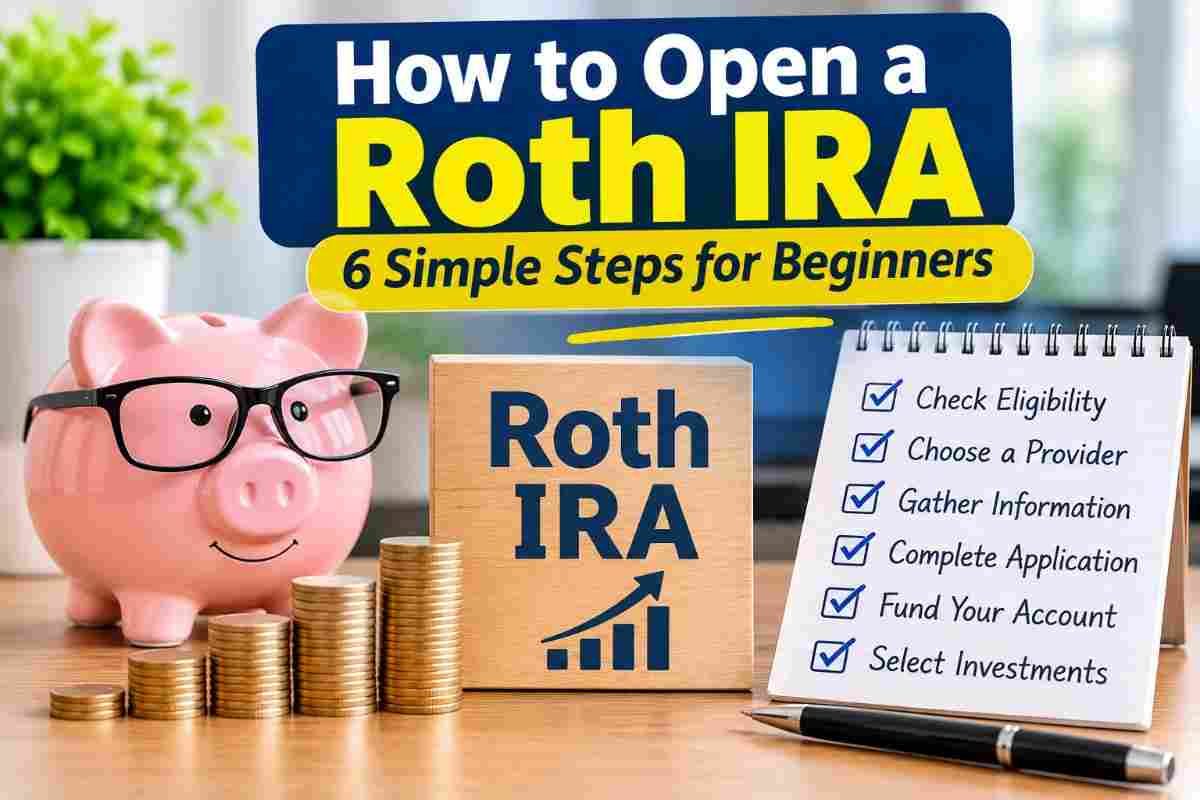
A Roth IRA is one of the most popular ways to save for retirement, largely because qualified withdrawals can be tax-free. Contributions are made with money you have already paid taxes on, which means the growth is not taxed later if you follow the rules. For first-time investors, the process can feel intimidating, but the steps are straightforward.
If you want to open a Roth IRA, SoFi explains how it handles the process on its site, and other brokers have similar steps. The six steps below walk you through the basics, from checking eligibility to making your first investment.
Rules and limits change, so verify current figures with the IRS or a tax professional before you contribute.
Set aside about thirty minutes for the application itself. Most of that time goes to gathering information and choosing investments, and having everything ready beforehand makes the process quick. If you are unsure about eligibility, run through the income and filing status rules before you start, so you do not have to unwind a contribution later.
1. Check That You Are Eligible
To contribute, you need earned income, and your income must fall below limits that the IRS sets each year. Those limits can reduce or eliminate the ability to contribute directly. Review the IRS page on IRA contribution limits for current numbers.
2. Decide Where to Open the Account
You can open a Roth IRA at a brokerage, bank or robo-advisor. Compare fees, investment choices, minimums and tools. Confirm the firm is a registered broker-dealer or bank, and look for clear fee disclosures.
3. Gather Your Information
You will typically need your Social Security number, a government ID, your address, employment details and bank account information. Having them ready makes the application quick.
4. Complete the Application
Applications are usually online and take a few minutes. You will choose the account type, name beneficiaries and agree to terms. Naming beneficiaries is easy to skip, but it ensures your money goes where you intend.
5. Fund the Account
Link a bank account and make your first contribution. Consider setting up automatic monthly transfers so you invest consistently. Remember that the annual limit applies across all your IRAs.
6. Choose Your Investments
Opening the account is not the same as investing. Money may sit in cash until you buy something. Many first-time investors choose diversified index funds or target-date funds. The SEC's page on exchange-traded funds explains one common option.
Keeping the Account on Track
Opening a Roth IRA comes down to checking eligibility, choosing a provider, gathering your information, completing the application, funding the account and choosing your investments. Once your Roth IRA is open, treat it as a long-term account. Contribute regularly, avoid early withdrawals of earnings and review your investments once a year. Understand the rules for qualified distributions, including the age and time requirements, so that a short-term need does not create taxes or penalties. A Roth IRA works best when you leave it alone and let compounding do the work. It can help to think of the account as a locked box with a window. You can watch the value, but you resist opening the lid. Reviewing once or twice a year is plenty, and checking daily rarely improves results. If you receive a raise or bonus, consider routing part of it to the account before lifestyle spending expands to fill the gap. Those small, repeated decisions are what turn a modest start into a meaningful balance over decades.
Mistakes to Avoid
Common errors include contributing more than the annual limit, forgetting to invest the cash after funding, withdrawing earnings early and neglecting beneficiaries. Some people also open an account and never add to it, losing the benefit of regular contributions. If you contribute early in the year, double-check that your income will still qualify, since exceeding the limits can mean corrections and penalties. When in doubt, ask a tax professional, and keep copies of your contribution records and annual statements.
Frequently Asked Questions
What are the best IRA accounts?
The best IRA accounts have low fees, a wide choice of investments, easy contributions, strong security and helpful support. Whether a Roth or traditional account is better depends on your tax situation and expectations, and many people use both over time. Compare several providers, including SoFi, on costs, tools and reputation, and choose the one that makes it easiest for you to contribute consistently. Do not forget to look at the investment lineup, because a low account fee means little if the funds you want carry high expense ratios.
Can I withdraw contributions from a Roth IRA?
Contributions can generally be withdrawn without tax or penalty, but earnings are subject to rules. Check the details before taking money out.
Is there an age limit to open a Roth IRA?
There is no age limit, but you need earned income to contribute.
How much can I contribute to a Roth IRA?
The IRS sets an annual limit that can change, and your income may reduce it. Check the current figures before contributing.
When can I withdraw earnings tax-free?
Generally after age fifty-nine and a half and after the account has been open for five years, with some exceptions.