
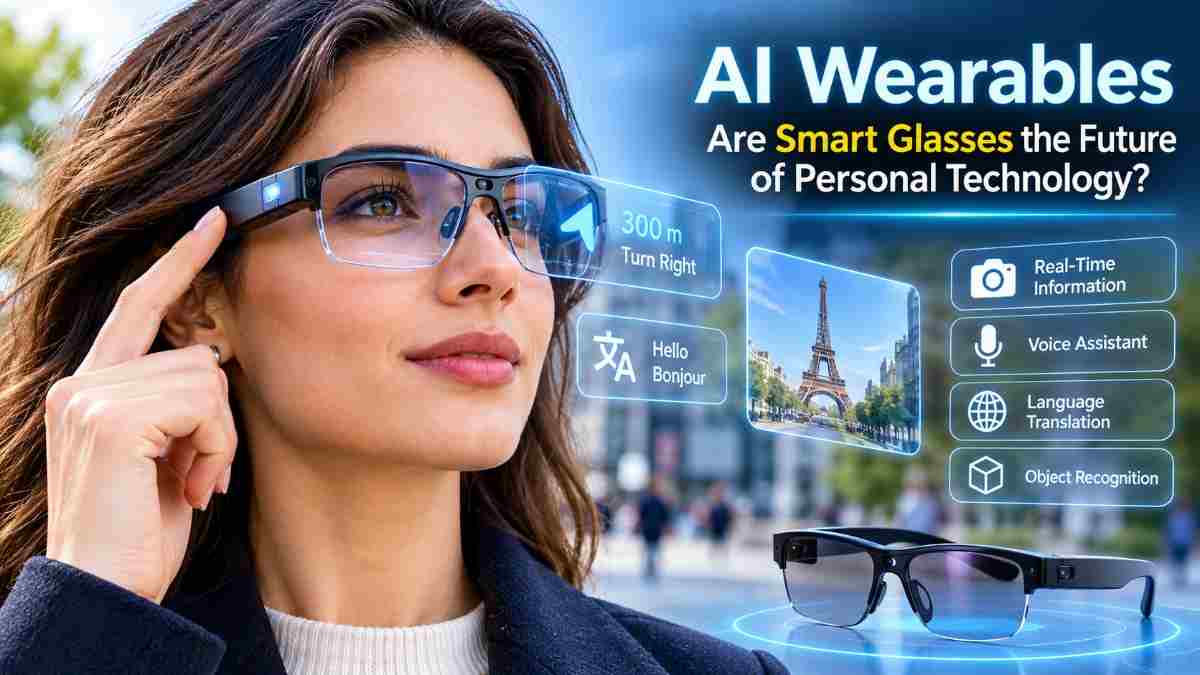
Technology has always found ways to become a bigger part of our daily lives. From smartphones and smartwatches to wireless earbuds, we now carry multiple devices to stay connected, informed and entertained. But what if we could access much of this technology without constantly looking at a screen? This is where AI-powered smart glasses enter the picture.
Smart glasses are no longer just experimental gadgets. With artificial intelligence becoming more advanced, companies are developing wearable devices that can understand conversations, answer questions, recognise objects, translate languages and even provide real-time assistance. They are slowly changing the way people interact with technology.
More Than Just a Pair of Glasses
At first glance, smart glasses look like ordinary eyewear. However, behind their stylish frames, they can include cameras, microphones, speakers, sensors and AI-powered features.
Imagine walking through a foreign country and understanding road signs in another language instantly. Or attending a meeting and getting a quick summary of the important points. You could even look at an unfamiliar object and ask your glasses what it is. These experiences are becoming possible through AI integration.
Unlike smartphones, which require users to pick them up and look at a screen, smart glasses offer a more natural, hands-free experience. Information can be accessed through voice commands, audio responses or small visual displays, depending on the device.
Why Are Tech Companies Investing in Smart Glasses?
The biggest attraction of AI wearables is convenience. People are increasingly looking for technology that fits naturally into their routines rather than demanding constant attention.
Smart glasses could be particularly useful for professionals, travellers, students and people who need hands-free assistance. For example, a technician could receive repair instructions while working, a tourist could get navigation support without checking a phone, and a student could access quick explanations while studying.
Companies such as Meta, Google and other technology players are exploring this growing market. Their investments suggest that wearable AI could become an important part of the next generation of personal computing.
The Challenges We Cannot Ignore
Despite their potential, smart glasses still have some important challenges to overcome. Privacy is one of the biggest concerns. Devices equipped with cameras and microphones may raise questions about recording people without their knowledge or consent.
Battery life, affordability, comfort and data security are other important factors. Not everyone will be comfortable wearing a device that constantly interacts with AI, especially when personal information is involved.
There is also the question of whether people genuinely need another smart device in their already technology-filled lives. For smart glasses to succeed, they must offer real value rather than simply being another fashionable gadget.
Are Smart Glasses the Future?
Smart glasses may not replace smartphones anytime soon, but they could gradually become an important addition to our digital lives. As AI becomes more accurate, devices become lighter and technology becomes more affordable, their everyday applications are likely to expand.
The future of personal technology may not be about carrying more screens. It may be about making technology almost invisible, allowing people to interact with information while staying connected to the world around them.
Ultimately, the success of AI-powered smart glasses will depend on one simple thing: whether they make everyday life genuinely easier. If they can achieve that, the future of technology might just be right in front of our eyes.