-black.png)
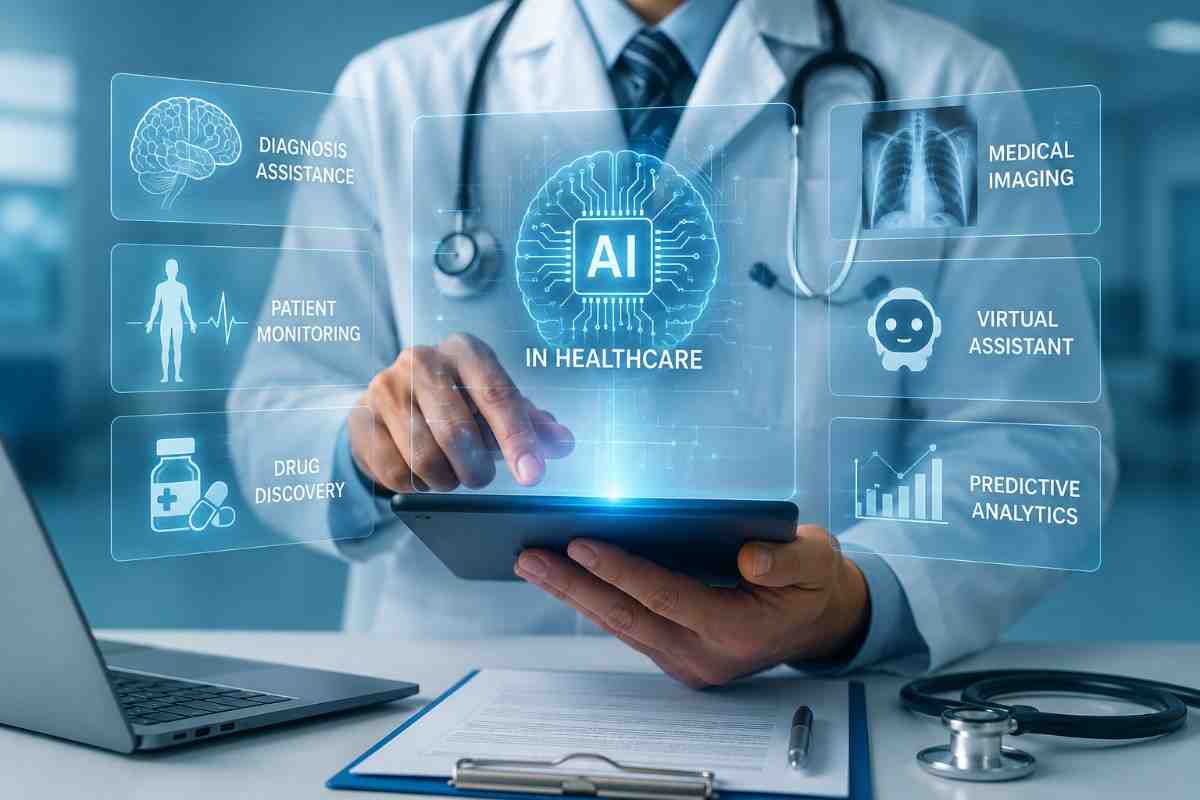
Healthcare has changed a lot in recent years, and one of the biggest reasons is Artificial Intelligence (AI). AI is helping doctors, nurses, hospitals, and patients by making healthcare faster, smarter, and more accurate. From diagnosing diseases to improving patient care, AI is becoming an important part of the medical industry.
In this blog, we will explore how AI is transforming healthcare and improving the lives of millions of people.
What is AI in Healthcare?
Artificial Intelligence (AI) is a technology that allows computers to perform tasks that normally require human intelligence. AI can study large amounts of medical data, identify patterns, and provide useful suggestions to healthcare professionals.
It does not replace doctors but works as a powerful tool that helps them make better decisions and deliver quality patient care.
Faster and More Accurate Diagnosis
One of the biggest benefits of AI is its ability to detect diseases quickly and accurately. AI-powered systems can analyze X-rays, CT scans, MRIs, and blood test reports within minutes.
Doctors use AI to identify conditions such as:
=> Cancer
=> Heart disease
=> Diabetes
=> Lung infections
=> Brain disorders
Early detection allows patients to receive treatment sooner, improving their chances of recovery.
Personalized Treatment Plans
Every patient is different, and AI helps doctors create treatment plans based on individual health conditions.
AI studies a patient's medical history, age, lifestyle, allergies, and test reports to recommend the most suitable treatment. This personalized approach increases the effectiveness of treatment while reducing unwanted side effects.
Virtual Health Assistants
Many hospitals and healthcare providers now use AI-powered virtual assistants and chatbots.
These digital assistants help patients by:
=> Booking appointments
=> Answering common health questions
=> Sending medication reminders
=> Providing basic healthcare guidance
=> Managing follow-up schedules
This saves time for both patients and healthcare staff.
Better Medical Imaging
Medical imaging plays an important role in diagnosing diseases. AI can examine medical images with remarkable accuracy and detect tiny abnormalities that may be difficult to notice.
Radiologists use AI to improve the accuracy of reports and reduce the chances of missed diagnoses.
Faster Drug Discovery
Developing new medicines usually takes several years. AI helps pharmaceutical companies speed up this process by analyzing millions of research papers, chemical compounds, and clinical trial results.
This allows researchers to identify promising medicines much faster, helping patients receive new treatments sooner.
Remote Patient Monitoring
AI has made remote healthcare more effective through wearable devices and smart health monitors.
Devices like smartwatches and fitness trackers can monitor:
=> Heart rate
=> Blood pressure
=> Oxygen levels
=> Sleep patterns
=> Physical activity
If any unusual health changes are detected, healthcare providers can be alerted immediately, allowing quick medical attention.
Improving Hospital Management
AI also helps hospitals operate more efficiently.
Hospitals use AI to:
=> Manage patient records
=> Reduce waiting times
=> Schedule appointments
=> Track medical equipment
=> Predict patient admissions
=> Improve staff planning
This results in smoother operations and better patient experiences.
Supporting Doctors Instead of Replacing Them
Many people worry that AI will replace doctors, but this is not true.
AI is designed to assist healthcare professionals by providing accurate information and reducing repetitive tasks. Doctors still make the final decisions, perform treatments, and offer emotional support that technology cannot replace.
The combination of human expertise and AI creates better healthcare outcomes.
Challenges of AI in Healthcare
Although AI offers many benefits, there are still some challenges that need attention.
These include:
=> Protecting patient data and privacy
=> High implementation costs
=> Maintaining data accuracy
=> Following healthcare regulations
=> Training medical professionals to use AI tools effectively
Addressing these challenges will help ensure safe and responsible use of AI in healthcare.
The Future of AI in Healthcare
The future of AI in healthcare looks very promising. As technology continues to improve, AI will become even more accurate and useful.
Future innovations may include robotic surgeries, faster disease prediction, personalized medicines, advanced wearable devices, and improved mental health support. AI will continue to help healthcare providers deliver better, faster, and more affordable care.
Conclusion
Artificial Intelligence is transforming healthcare by improving diagnosis, personalizing treatment, enhancing hospital operations, and supporting medical professionals. While AI cannot replace the experience and compassion of doctors, it is becoming an essential partner in modern medicine.
As healthcare technology continues to evolve, AI will play an even bigger role in improving patient care, reducing medical errors, and making quality healthcare accessible to more people around the world. By combining human expertise with intelligent technology, the future of healthcare is becoming smarter, safer, and more patient-focused.